Understanding Snake Strike Zones and Lower Leg Protection
Understanding Snake Strike Zones and Lower Leg Protection
Venturing off-grid exposes outdoor enthusiasts to encounters with venomous reptiles like PRIMARY_VENOMOUS_SNAKE_SPECIES. Understanding how snakes attack enables hikers and hunters to choose gear that mitigates risk effectively.
How Snake Strike Mechanics Work
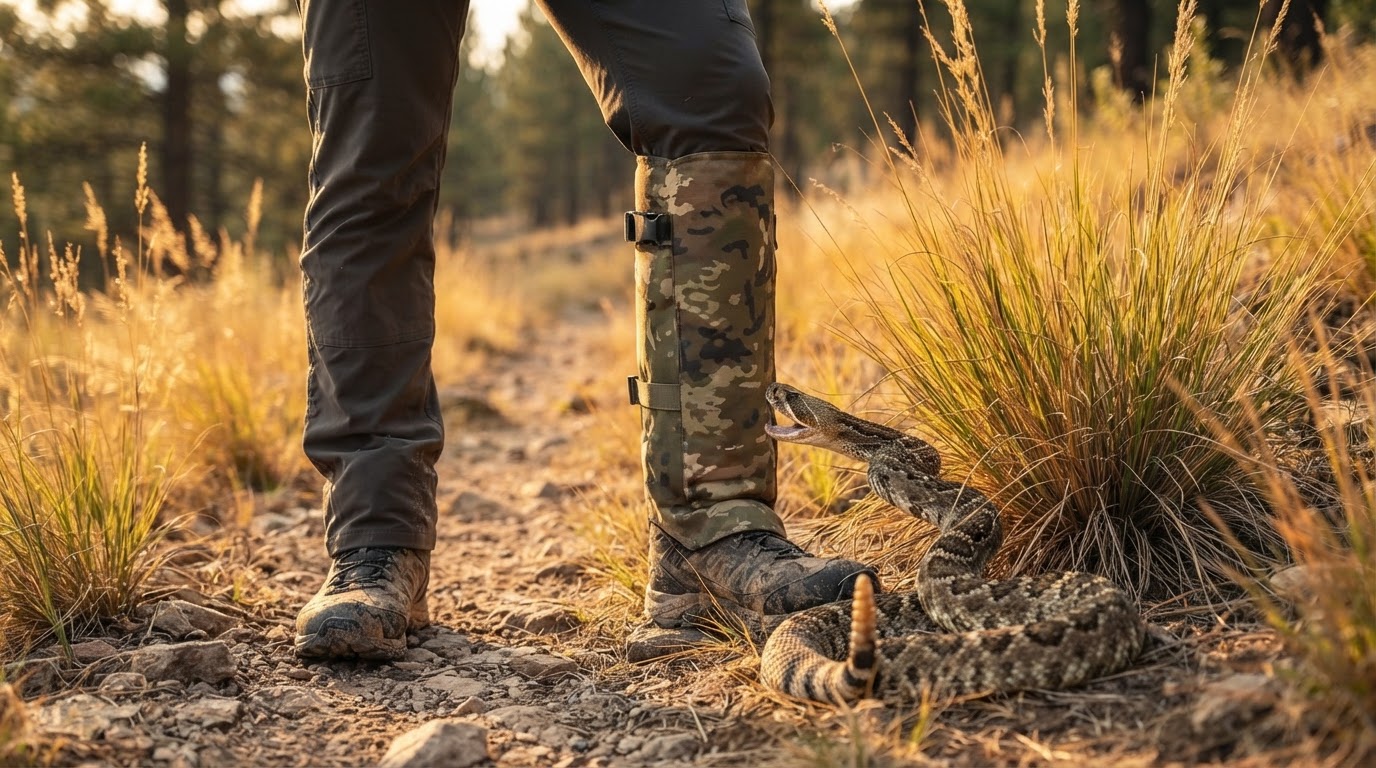
Snakes strike defensively when startled or cornered. The mechanics of a strike rely on rapid muscle contraction, launching the snake forward up to half its body length. Maintaining a distance greater than SAFE_DISTANCE_FEET remains the primary rule of field safety.
When surprised in tall grass or brush, a snake typically targets the nearest moving object—usually the lower ankle or calf. Standard denim or canvas trousers offer little physical resistance against dense fang pressure.
Typical Strike Height Dynamics

Most ground-dwelling venomous snakes deliver strikes within MAX_BITING_HEIGHT_INCHES from the ground. Attacks rarely reach above the knee unless the victim steps down into a ravine or off a log directly above the snake.
Because the vast majority of bites target the lower leg, targeted leg armor provides optimal defensive coverage without requiring full-body protection.
Mitigating Strike Risk with Gaiters
Using specialized leg armor drastically reduces puncture risks. For a complete breakdown on snake defense gear, check out the main guide.
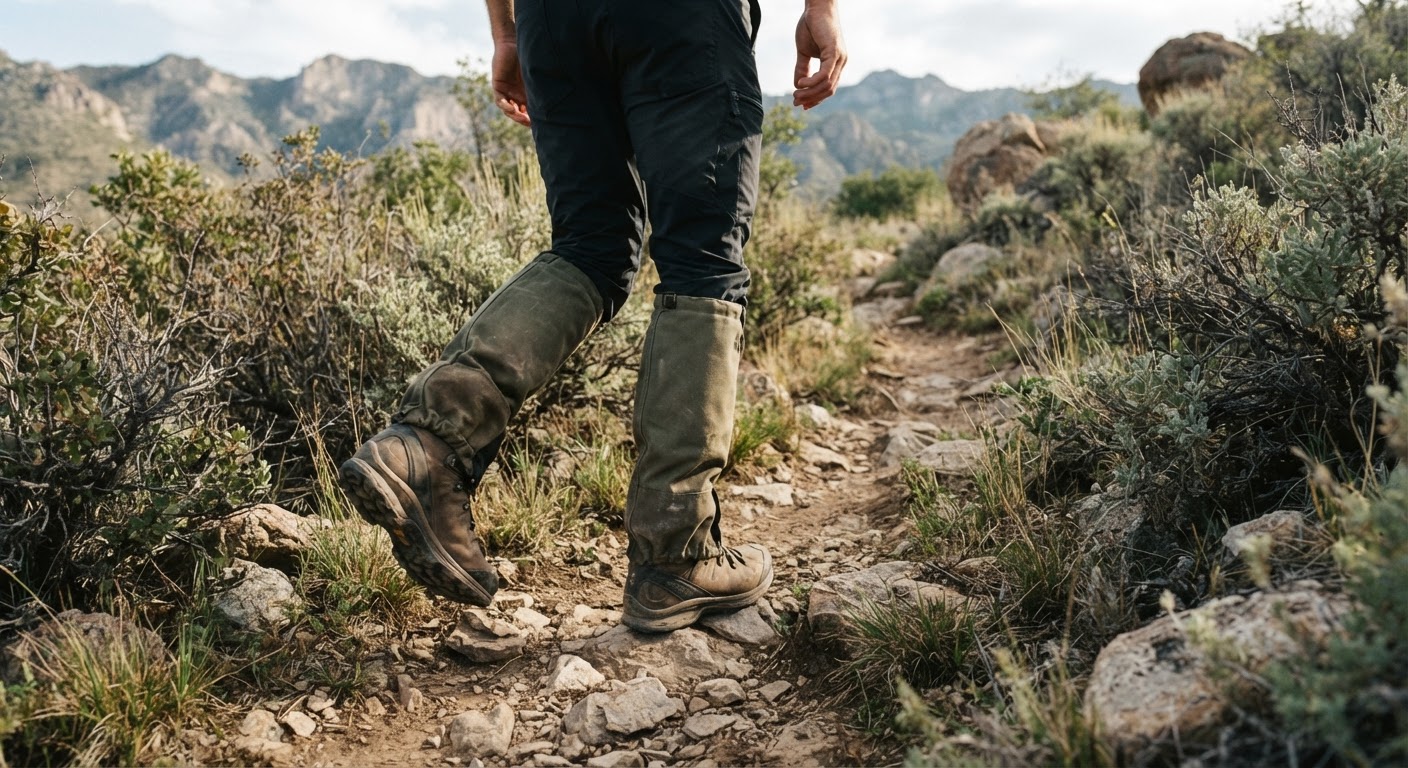
Trail Guard Gaiters wraps around the lower leg, creating a outer wall engineered from durable fabric that stops fang penetration. Coupling these gaiters with sturdy footwear ensures comprehensive lower-leg defense during any outdoor expedition.
Read the full guide: The Definitive Guide to Snake-Resistant Leg Gaiters and Backcountry Safety