
Optimizing Trail Guard Gaiters for Ultralight Running
 Maya ChenContributing Editor
July 23, 2026. This analysis examines the technical requirements of lightweight debris protection for high-cadence movement. It is written for competitive trail runners and fastpackers who prioritize weight-to-protection ratios above aesthetic considerations.
The Debris Management Problem in High-Mileage Efforts
The conventional wisdom says that any barrier between your sock and the trail is a net positive for foot health. However, for the serious trail runner, the weight penalty of traditional hiking gear often outweighs the benefit. According to iRunFar, specialized options like the Altra Trail Gaiter weigh as little as 1.3 ounces per pair, while the Trado Trail Gaiters drop even further to 0.9 ounces for a small size. These weights are negligible, yet many runners still avoid them due to perceived breathability issues or mechanical failure on technical terrain. Here's the part nobody talks about: the true cost of a gaiter isn't the grams on your scale; it is the heat retention that leads to maceration and blisters. If a gaiter keeps out small pebbles but traps moisture against the ankle, it has failed its primary objective of maintaining foot integrity.
When evaluating trail running gaiters, the goal is to prevent the entry of scree and dust without creating a microclimate. Data from Adventure Alan suggests that the most effective designs for this purpose are strapless, stretchy, and low-cut. This is particularly critical when selecting breathable running gaiters for high-output efforts. In desert environments or volcanic scree fields—like those found in the San Juan Mountains—the ingress of fine silt can act like sandpaper. This necessitates a tight seal at the top of the shoe, yet most ultralight options struggle with durability when they encounter dense underbrush. For those moving fast, the trade-off between a 1-ounce lycra shield and a 4-ounce ruggedized shell is a calculation of terrain severity versus aerobic cost.
Engineering the Trail Guard Solution

Photo by RUN 4 FFWPU on Pexels
Trail Guard Gaiters are engineered to bridge the gap between the fragile 1-ounce liners and the heavy-duty mountaineering wraps. While brands like Dirty Girl Gaiters focus on being ultralight at less than 2 ounces, they often lack the structural reinforcement required for off-trail bushwhacking. Trail Guard utilizes a specific nylon-spandex blend that prioritizes tension over mere coverage. This tension is what prevents the "sagging" effect often seen in looser lightweight models, which iRunFar noted can lead to debris entering through the bottom gaps in sandy conditions. By utilizing a high-density weave, Trail Guard maintains the necessary airflow for breathable running gaiters while providing a physical barrier that doesn't snag as easily on low-lying thorns.
Run the math: a runner taking 160 steps per minute over a six-hour ultramarathon will lift their feet over 57,000 times. Adding even two extra ounces per foot results in thousands of pounds of cumulative lifted weight. Trail Guard addresses this by stripping away unnecessary hardware. Instead of heavy under-arch straps that break on sharp rocks, these gaiters utilize a reinforced front hook and a high-cycle-life heel attachment. Unlike the best hiking gaiters for summer, which might prioritize water resistance or snake protection, the Trail Guard philosophy is centered on mechanical exclusion. It creates a seamless interface with the shoe's collar. This is essential because even a single granite chip can end a race if it forces a stop to remove the shoe. By focusing on a low-profile silhouette, Trail Guard minimizes the aerodynamic and physical profile of the runner's lower leg, ensuring that the gear serves the performance rather than hindering it.
A Framework for Lightweight Gaiter Selection
Choosing the right protection requires a skeptical look at your specific race or training environment. Many runners over-buy for "worst-case scenarios" that never materialize on groomed trails. If you are primarily running on fire roads, you may not need a gaiter at all. However, if your route includes loose scree, pine needles, or fine dust, the following checklist should govern your decision-making process:
- Total weight must remain under 2.5 ounces per pair to avoid altering stride mechanics.
- Attachment systems should be strapless to prevent snagging on roots and rocks.
- Material should be a synthetic blend (nylon/spandex) to ensure quick-drying properties after stream crossings.
- The heel interface must use industrial-grade adhesive or integrated shoe traps to prevent vertical migration.
- Cuff tension must be sufficient to stay in place without restricting blood flow to the foot.
Shop Trail Guard Gaiters here.
Sources
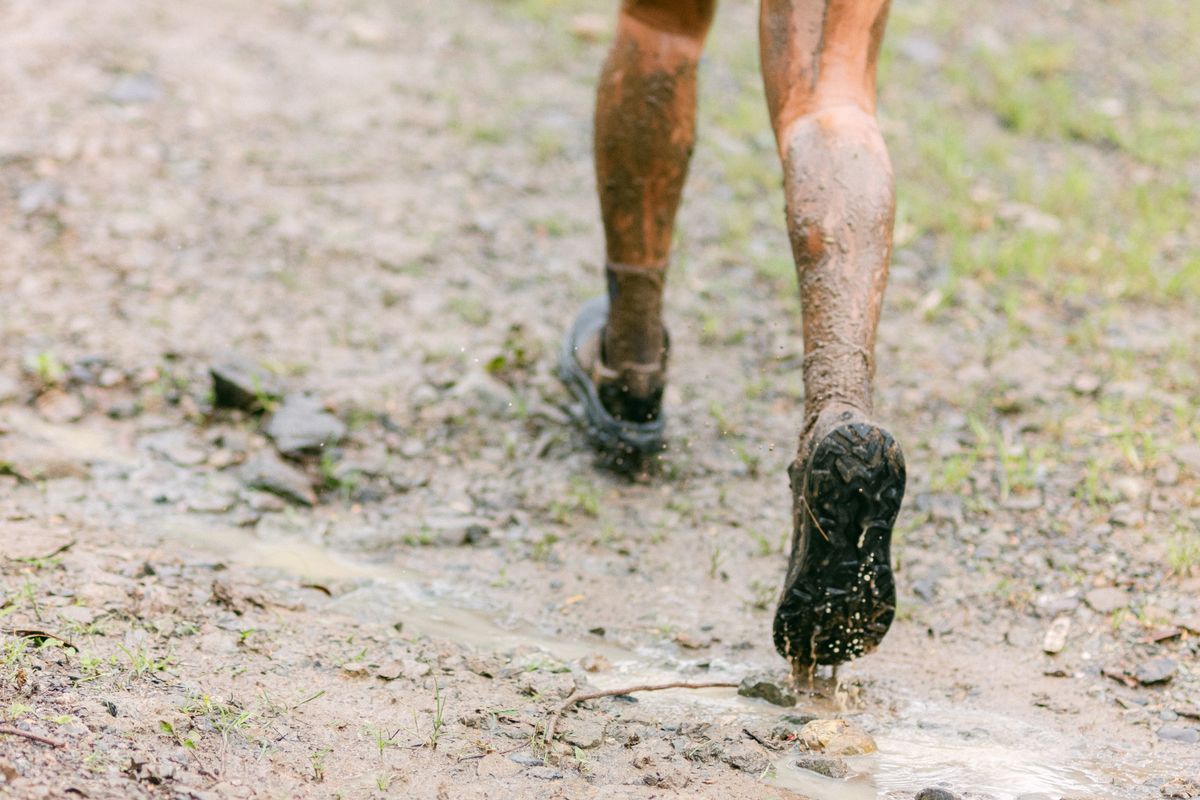
Photo by Ilarawan Photography on Pexels