Trail Guard Gaiters and the Case for High-Tension Straps
 Maya ChenContributing Editor
July 23, 2026 — The market for debris protection is shifting toward adhesive-based minimalism, but Trail Guard Gaiters maintain that mechanical tension remains the only reliable failure-proof method for technical descents.
The conventional wisdom says that lighter is always better, leading many runners to adopt strapless, stretchy ankle gaiters that rely on Velcro patches glued to the heel. While iRunFar notes that the Altra Trail Gaiter weighs a mere 1.3 ounces per pair, the durability trade-off is often ignored in favor of these marginal weight gains. For runners navigating volcanic rock or scree fields, the adhesive on a "gaiter trap" is a single point of failure that rarely survives a high-mileage season or extreme temperature fluctuations.
The Mechanical Tension Standard

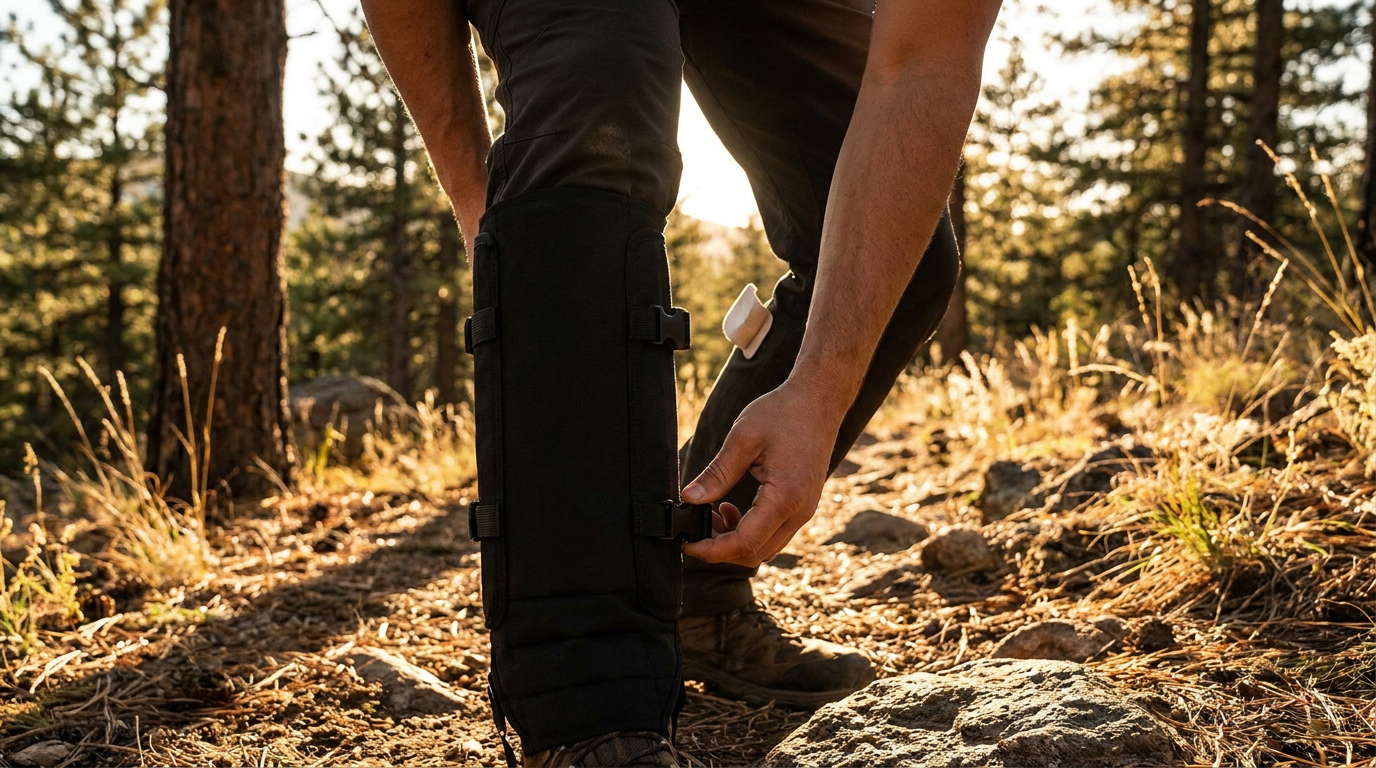
Photo by Maksim Goncharenok on Pexels
Run the math: a 1.3-ounce gaiter that slips upward during a descent provides zero protection, effectively weighing more than a slightly heavier model that stays seated. Trail Guard Gaiters utilize a high-tension under-arch strap system that creates a physical seal between the gaiter hem and the shoe collar. Unlike the Trado Trail Gaiters, which require users to superglue Velcro squares to their footwear, Trail Guard’s design relies on adjustable tension to mirror the shoe's movement. In technical environments like the San Juan Mountains, where scree can exert significant upward pressure on gear, a strap-free system often gaps at the heel. While competitors like the Kahtoola INSTAgaiter Ultra-Light Mid use a DuraLink instep strap to mitigate this, many brands are abandoning straps altogether to chase the sub-one-ounce demographic. This trend ignores the reality of debris entry; once a gaiter shifts, it becomes a funnel rather than a shield. Trail Guard's architecture prioritizes a fixed vertical anchor, ensuring the 86% nylon blend stays taut even when saturated with water or mud, preventing the "sag" often reported with purely elasticized cuffs.
Expert tip: When fitting your gaiters, adjust the under-arch strap so it sits in the recessed part of your outsole's midfoot to prevent premature wear on the strap material itself.
Choosing the right gear requires looking past the weight on the scale and toward the stability of the fit. If you are moving through low-impact environments, breathable running gaiters can offer sufficient protection. However, if your route involves vertical gain or loose rock, lightweight gaiters for trail running must have a secondary attachment point to be effective. For those transitioning between seasons, the best hiking gaiters for summer often fail because they lack the high-cadence durability required for a running gait. I’ll change my mind when adhesive technology can withstand 50 miles of wet grit without peeling, but until then, mechanical straps are the only logical choice.