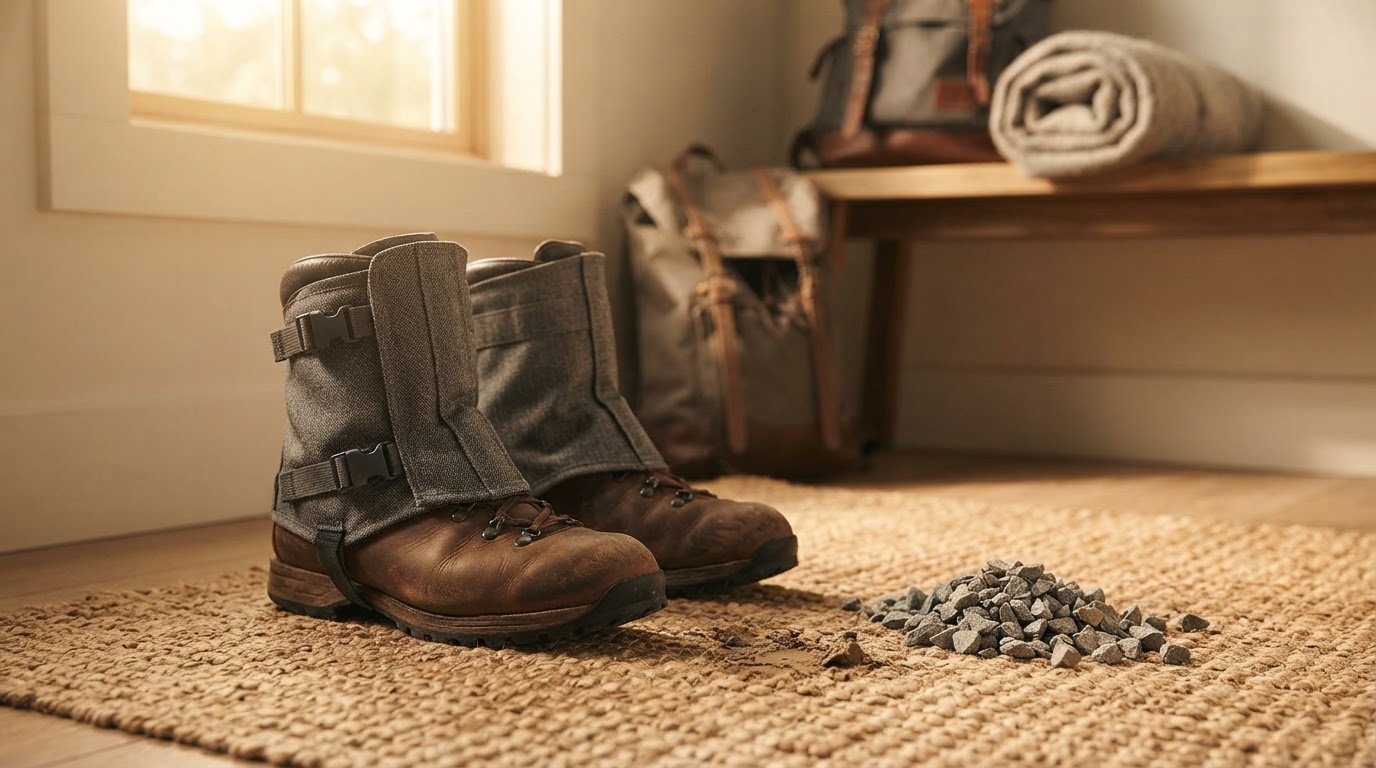
Why Use Trail Guard Gaiters with Hiking Boots?
 Jordan HaleStaff Writer
July 28, 2026 — Trail Guard Gaiters provide a physical barrier that prevents scree, mud, and moisture from entering the collar of a hiking boot, provided the gaiter is compatible with the boot's ankle height.
I remember the distinct crunch of granite under my soles during a steep ascent last summer. Every few miles, I found myself balancing on one leg, digging out sharp pebbles that had hopped over the rim of my leather boots. It is a small frustration that eventually leads to real hot spots and blisters if left unaddressed.
Can Trail Guard Gaiters fit over heavy hiking boots?
Yes, Trail Guard Gaiters are designed to accommodate the larger volume of hiking boots through adjustable instep straps and flexible fabric tension. The first thing I noticed was how the strap sits securely in the recessed arch of a lugged boot sole. According to expert advice from REI, these instep straps are critical because they secure the lower edge of the gaiters around the boot's instep, preventing the fabric from riding up during high-stepping or deep mud crossings. While some ultralight options like Dirty Girl Gaiters are primarily used with trail running shoes and low-to-mid ankle footwear, a robust boot-compatible gaiter must account for the thicker circumference of a traditional hiking boot. I keep coming back to the way a proper fit feels; it shouldn't pinch the ankle, but it must create a debris-proof seal against the leather or synthetic upper of the boot to be effective.
Do hiking boots provide enough protection without gaiters?

Photo by ROMAN ODINTSOV on Pexels
No, even high-top hiking boots leave a gap at the ankle that allows fine dust, pine needles, and small stones to enter the interior of the footwear. Somewhere around week two of testing various setups, it turns out that the height of the boot is less important than the seal at the top of the cuff. CleverHiker notes that while mid-cut boots offer some stability, they work best when paired with a gaiter to block external elements. For those using gaiters for hiking boots low cut, the gaiter serves as an extension of the shoe's collar. Without this extra layer, the mechanical action of your stride naturally funnels trail debris downward. I have found that even on well-groomed paths, the fine silt kicked up by my own heels eventually migrates into my socks, causing abrasive wear that a simple pair of Trail Guard Gaiters easily prevents.
Quick answers

Photo by Matheus Bertelli on Pexels
Q: What is the main difference between boot gaiters and trail running gaiters? A: Boot gaiters typically feature more durable instep straps to survive rocky terrain, whereas trail running options like Dirty Girl Gaiters focus on being ultralight, often weighing less than 2 ounces per pair.
Q: How do I ensure gaiters stay attached to my boots? A: Most designs use a combination of a front lace hook and an under-sole strap; Kahtoola hiking gaiters, for example, are specifically engineered to stay secure using these tension points to keep out dust and snow.
Q: Are Trail Guard Gaiters necessary for short day hikes? A: If the trail involves loose gravel or dry leaf litter, a dirt and rock guard for shoes is highly recommended to prevent stopping for shoe clearances, which is a common issue on even 3-mile excursions.
Internal links for further reading include our guide on dirt and rock guard for shoes and specific considerations for gaiters for hiking boots low cut.
Learn more about Trail Guard Gaiters at https://trailguardgaiters.com.